- How to Analyze Vacancy Rates in Your Portfolio
- What is vacancy rate & why is it important to investors? 🏠 ❌
- How to Calculate Vacancy Rates
- Unit-Based Formula
- Time-Based Formula
- Economic Vacancy Rate
- Tips for Accurate Calculations
- How to Analyze Vacancy Rates Across Your Portfolio
- Collecting Data for Portfolio Analysis
- Breaking Down Data by Property Type or Location
- Using Tools for Vacancy Rate Tracking
- sbb-itb-f750c3f
- How to Read Your Vacancy Rate Results
- What is a Normal Vacancy Rate?
- Spotting Problem Areas
- Comparing Properties for Better Insights
- How to Reduce Vacancy Rates
- Adjust Pricing to Match Market Trends
- Improve Marketing and Tenant Retention
- Upgrade Property Condition and Amenities
- Next Steps
- Key Points from Vacancy Rate Analysis
- How The Elle Group Can Help
- FAQs
- How can I tell if my property's vacancy rate is higher than average?
- How can I reduce vacancy rates in properties with frequent tenant turnover?
- What’s the best way to calculate vacancy rates for my property portfolio?
Investing Tips
How to Analyze Vacancy Rates in Your Portfolio
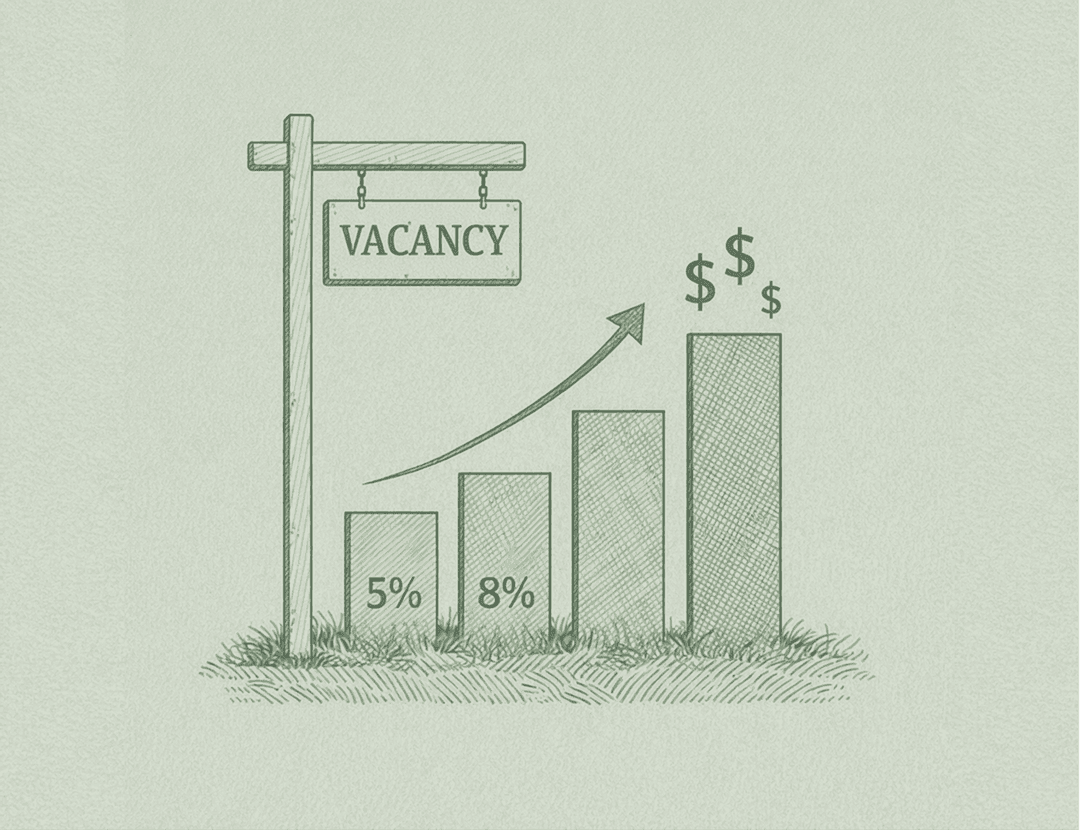
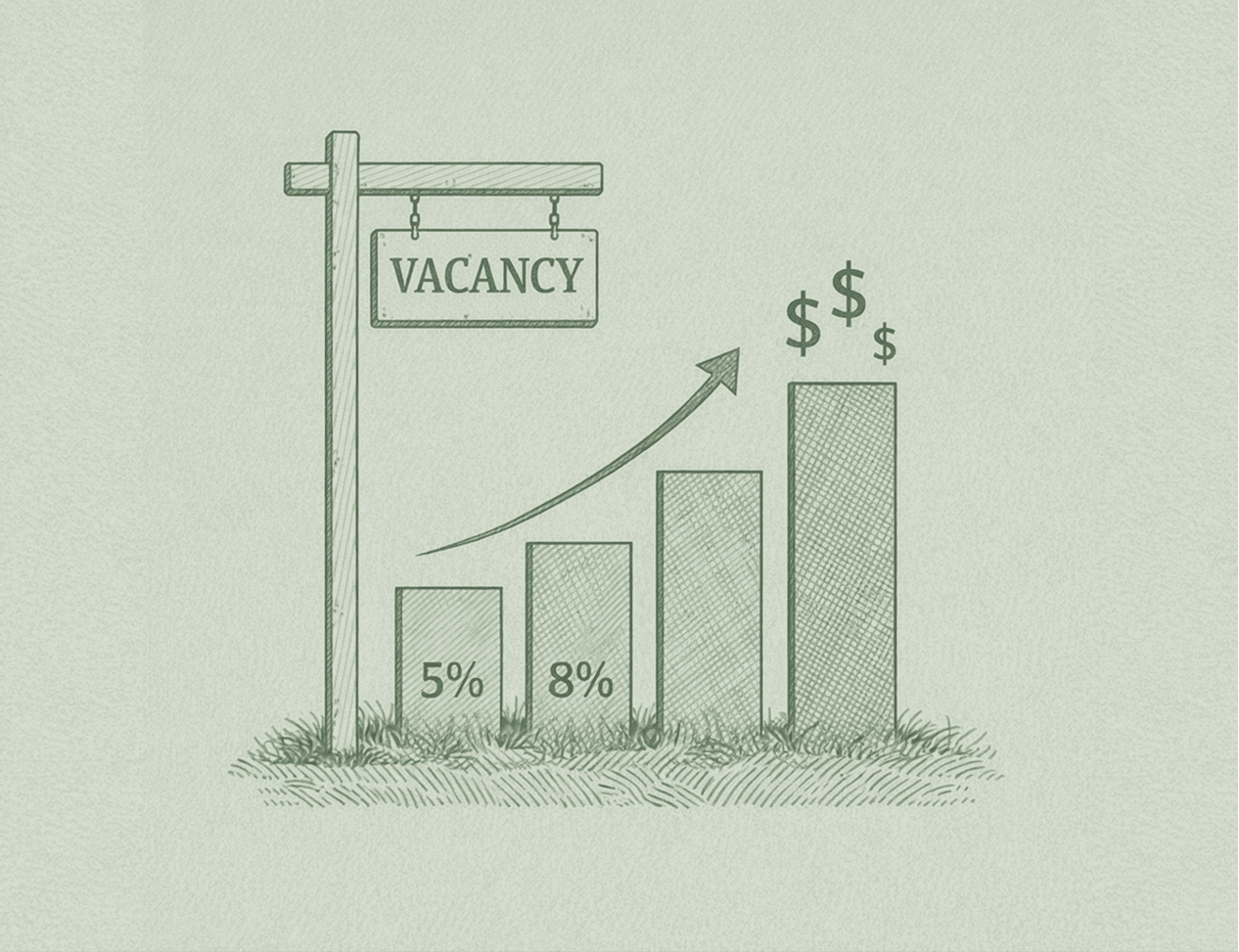
Vacancy rates directly impact your rental income and portfolio performance. A high vacancy rate means lost revenue, while a low rate indicates strong property performance. Here's what you need to know:
- What is a Vacancy Rate? It’s the percentage of time a property remains unoccupied. For example, a unit vacant for 30 days in a year has an 8.2% vacancy rate.
- Why It Matters: A 6.8% vacancy rate on $126,000 annual potential income equals $8,568 in lost revenue. Tracking this helps spot issues like overpriced rents or poor marketing.
- How to Calculate It: Use formulas like unit-based (vacant units ÷ total units), time-based (vacant days ÷ total available days), or economic (revenue loss ÷ potential income). Each method offers unique insights.
- National Benchmarks: The U.S. average residential vacancy rate is 6.6% (Q1 2024). Compare your properties to this to gauge performance.
- Reducing Vacancy: Adjust pricing, improve marketing, retain tenants, and upgrade property conditions to minimize vacancies and boost income.
Tracking and analyzing vacancy rates ensures you make informed decisions to improve your portfolio's profitability. Accurate data and regular reviews are key to spotting underperforming properties and addressing issues quickly.
What is vacancy rate & why is it important to investors? 🏠 ❌
How to Calculate Vacancy Rates
Vacancy rates can be calculated using three main methods: unit-based for quick occupancy snapshots, time-based for analyzing vacancy durations, and economic for understanding revenue impact.
Unit-Based Formula
The unit-based formula is a straightforward way to calculate vacancy rates by comparing the number of vacant units to the total number of units. It’s particularly useful for quick assessments of occupancy levels.
The formula is:
(Number of Vacant Units ÷ Total Units) × 100
For example, if you own a 20-unit building with 2 vacant units, the vacancy rate is:
If your portfolio includes one four-unit multifamily property and three single-family homes (7 units total) with 1 vacant unit, the vacancy rate would be:
This formula is ideal for comparing properties of similar size or for making quick decisions regarding marketing or pricing. However, it doesn’t account for how long units remain vacant, which can significantly affect revenue.
Time-Based Formula
The time-based formula looks at the percentage of time units remain vacant over a specific period, helping to measure revenue lost due to varying vacancy durations. The formula is:
(Total Vacant Days ÷ Total Available Days) × 100
For instance, if a single property is vacant for 30 days out of a year (365 days), the vacancy rate is:
For a portfolio, you sum up the vacant days across all properties. If your portfolio has 2,700 vacant days out of 45,000 possible rental days in June, the vacancy rate would be:
In another example, if 7 units collectively record 120 vacant days in a year, the calculation is:
This method is particularly useful for larger portfolios where vacancy durations vary, offering a more detailed view of overall performance.
Economic Vacancy Rate
The economic vacancy rate factors in revenue loss from not just physical vacancies but also other issues like rent concessions or unpaid rent. The formula is:
((Gross Potential Rent – Actual Rental Income) ÷ Gross Potential Rent) × 100
For example, if your gross potential rent is $100,000 annually but you collect only $95,000, the economic vacancy rate is:
(($100,000 – $95,000) ÷ $100,000) × 100 = 5%[7].
This metric highlights revenue losses that might not be obvious if you only consider unoccupied units, giving a clearer picture of your portfolio's financial performance[3][11].
| Formula Type | Best Use Case | Example Calculation | Key Insight |
|---|---|---|---|
| Unit-Based | Quick occupancy snapshot | (2 vacant ÷ 20 total) × 100 = 10% | Physical vacancy at a point in time |
| Time-Based | Duration analysis | (120 vacant days ÷ 2,555 total days) × 100 ≈ 4.7% | Time-weighted vacancy impact |
| Economic | Revenue impact assessment | (($100k – $95k) ÷ $100k) × 100 = 5% | Actual income loss measurement |
Tips for Accurate Calculations
To ensure your vacancy rate calculations are reliable, it’s crucial to collect accurate data. Keep detailed records, including move-in and move-out dates, actual rent collected versus potential rent, and any concessions or payment issues. Common mistakes, such as overlooking partial vacancies, miscounting days, or failing to update records promptly, can lead to underestimating lost income or missing problem areas in your portfolio.
Using property management tools like Landlord Studio, Stessa, or Azibo can simplify data tracking, minimize errors, and provide detailed reports to help you monitor trends across your properties.
How to Analyze Vacancy Rates Across Your Portfolio
Once you've calculated the vacancy rates for individual units, the next step is to evaluate them across your entire portfolio. This broader analysis helps identify patterns, pinpoint problem areas, and uncover opportunities for improvement. It's an essential step in shaping a more effective strategy.
Collecting Data for Portfolio Analysis
Start by standardizing how you collect data. Gather rental records and consistently track the number of vacancy days for each unit over a calendar year. Using clear and uniform metrics like "days vacant per year" ensures accurate comparisons across all properties.
To calculate the overall portfolio vacancy rate, use this formula:
(Total Days Vacant ÷ (Total Days in Period × Number of Units)) × 100
This formula gives you a big-picture view of how your portfolio is performing. For instance, if three properties have 10, 20, and 5 vacant days respectively, the total vacant unit-days add up to 35. If your portfolio includes five units over a year (5 × 365 = 1,825 unit-days), the vacancy rate would be:
(35 ÷ 1,825) × 100 ≈ 1.92%[6].
Even a small shift in this percentage can significantly impact revenue. For large portfolios, a one-point increase in vacancy rate might mean losing tens or even hundreds of thousands of dollars annually[13]. This is why having accurate data is so critical - it forms the foundation for decisions that can improve your portfolio's profitability.
Breaking Down Data by Property Type or Location
Analyzing vacancy rates by property type or location can reveal valuable trends. For example, if downtown Boston multifamily units have a 3% vacancy rate but suburban single-family homes are at 8%, it’s clear that downtown properties are performing better. These insights can guide decisions like adjusting rental prices, refining marketing strategies, or prioritizing upgrades.
For investors with properties spread across different regions, location-based analysis is especially useful. You may discover that certain neighborhoods consistently outperform others, influencing where to focus new acquisitions or management efforts. Similarly, breaking down data by property type can highlight operational differences that may require tailored approaches.
Using Tools for Vacancy Rate Tracking
To simplify tracking and analysis, consider using automated tools like Stessa, Landlord Studio, or Azibo. These platforms provide real-time vacancy tracking and reporting, making it easier to stay on top of changes. Alternatively, you can create detailed spreadsheets with tables and charts for manual tracking. Whichever method you choose, aim to update your analysis quarterly or whenever there are significant market shifts. This ensures your strategies remain aligned with current conditions.
sbb-itb-f750c3f
How to Read Your Vacancy Rate Results
Understanding your vacancy rates isn’t just about crunching numbers - it’s about uncovering areas for improvement and making informed decisions to boost your portfolio’s performance. By interpreting these results, you can fine-tune your strategy and work toward maximizing returns.
What is a Normal Vacancy Rate?
For residential properties in the United States, vacancy rates usually fall between 5% and 10%, with the national average sitting at about 6.6% in Q1 2024, according to the US Census Bureau [3]. When it comes to multifamily properties, the average is slightly lower, hovering around 6% [12].
However, these benchmarks can vary widely depending on local demand and market conditions. Urban areas with strong demand often see rates dip below 5%, while rural or oversupplied markets may experience rates above 10% [8].
Context is everything. For instance, a 7% vacancy rate might raise red flags in a competitive urban market but could be perfectly acceptable in a slower suburban area. Use these benchmarks as a guide to identify areas where adjustments might be needed.
Spotting Problem Areas
High vacancy rates, especially those consistently above 10%, are a clear signal that something needs attention. Recurring vacancies in the same unit could point to issues like overpricing, poor property conditions, or challenges tied to the location [4]. Persistent tenant turnover might also indicate problems with your screening process, lease terms, or the property’s overall appeal.
It’s also important to look for patterns. Are vacancies clustered in a specific neighborhood or property type? For example, if single-family homes in your portfolio consistently underperform while apartments maintain solid occupancy, it could reflect shifting rental preferences in the area. Similarly, if one neighborhood lags behind others, changing local market conditions might be at play.
Don’t overlook the economic vacancy rate, which goes beyond physical vacancies. A property might appear fully occupied but still lose revenue due to rent concessions, late payments, or below-market rents [14]. This metric provides a more accurate picture of how vacancies are affecting your bottom line.
Comparing Properties for Better Insights
Once you’ve identified problem areas, compare the performance of individual properties to spot your portfolio’s strongest and weakest links. Here’s an example:
| Property Name | Vacant Days | Total Days | Vacancy Rate (%) |
|---|---|---|---|
| Downtown Loft | 15 | 365 | 4.1 |
| Suburban Duplex | 45 | 730 | 6.2 |
| College Rental | 90 | 365 | 24.7 |
| Portfolio Avg | 150 | 1,460 | 10.3 |
In this case, the College Rental stands out with a 24.7% vacancy rate, signaling a need for immediate attention. On the other hand, the Downtown Loft is performing well with a low 4.1% rate.
But don’t stop at the raw numbers. A newer property with a higher vacancy might just need better marketing, while an older property could require upgrades or maintenance. If two properties in similar neighborhoods show drastically different results, it might point to management or pricing issues.
Use these comparisons to prioritize your next steps. Addressing properties with the highest vacancy rates first can yield the most noticeable improvements [4]. And by tracking vacancy data over time, you can evaluate whether your strategies are working - or if it’s time to rethink your approach or seek professional advice.
How to Reduce Vacancy Rates
Lowering vacancy rates requires a mix of smart pricing, effective marketing, strong tenant retention efforts, and well-planned property upgrades. By focusing on these areas, landlords and property managers can ensure their units stay occupied while maximizing revenue.
Adjust Pricing to Match Market Trends
Pricing plays a big role in vacancy rates. If your rent is too high, your property might sit empty for longer. If it’s too low, you’re leaving money on the table. The key is striking the right balance based on current market conditions.
Start by analyzing comparable properties in your area. Look at online rental platforms, local real estate data, and comparable market analysis (CMA) reports. Pay attention to factors like the property’s condition, amenities, and location when setting your rates. For example, if similar units in your neighborhood rent for less and have lower vacancy rates, it might be time to adjust your pricing.
Keep an eye on how long your units stay vacant. If a property remains empty for over 30 days, consider reducing the rent by 5–10% to attract tenants more quickly. For landlords managing a portfolio, compare vacancy rates across properties. If your portfolio averages a 6.8% vacancy rate but one property is at 11%, that unit likely needs a pricing review.
Pricing adjustments can have a measurable financial impact. For instance, a portfolio generating $126,000 in gross potential income could recover an extra $1,848 annually by reducing the average vacancy rate from 6.8% to 5%.
Strategic pricing not only fills vacancies faster but also supports better results in marketing and tenant retention.
Improve Marketing and Tenant Retention
Keeping your current tenants happy is often more cost-effective than finding new ones. When tenants leave, you’re faced with vacancy periods, marketing expenses, repair costs, and lost income. That’s why tenant retention should be a top priority.
Build strong relationships with your tenants by being responsive to maintenance requests, communicating openly, and keeping rent increases reasonable. If certain properties have higher turnover rates, dig into the reasons - issues like poor maintenance or unresponsive management are common culprits.
Retention strategies can include offering lease renewal bonuses (e.g., $100–$300), maintaining properties in excellent condition, and addressing concerns promptly. These efforts not only keep tenants longer but also enhance their overall satisfaction.
When vacancies do occur, having a robust marketing strategy is crucial. Use professional photos, virtual tours, and list your property on multiple platforms like Zillow and Apartments.com. Social media advertising can also help broaden your reach. Measure the effectiveness of your marketing by tracking how quickly units are leased. For instance, reducing the average vacancy period from 30 days to 14 days represents a 53% improvement.
"Ensure every unit in your building is occupied by reliable, trustworthy tenants with our expert leasing services tailored to your goals." - The Elle Group [1]
Experiment with different marketing channels and track metrics like inquiries per listing and time-to-lease. Fewer problem tenants mean fewer future vacancies, so tenant quality should also factor into your strategy.
Upgrade Property Condition and Amenities
The condition of your property directly affects how attractive it is to potential tenants. Well-maintained units with desirable amenities are far more likely to lease quickly.
Start with essential repairs and minor cosmetic upgrades. Basics like updated kitchens, modern bathrooms, fresh paint, and reliable HVAC systems can make a big difference. If you’re targeting families, features like outdoor spaces or extra storage might stand out. For student housing, consider adding high-speed internet or study areas.
If a particular unit consistently has higher vacancy rates, it may need specific improvements. Conduct a property assessment to identify deferred maintenance issues, then plan upgrades accordingly. Before committing to costly renovations, test the market response with smaller changes like new fixtures or landscaping.
Competitive analysis can also guide your decisions. Research nearby properties to see what amenities they offer, how they market themselves, and what rents they charge. If competitors are leasing faster or at higher rates, figure out what sets them apart. This insight can help you make upgrades that align with tenant expectations in your market.
When paired with smart pricing and marketing, enhancing your property’s condition creates a stronger overall strategy for reducing vacancies.
Next Steps
Now that we've covered the analysis in detail, it's time to focus on actionable steps to optimize your portfolio.
Key Points from Vacancy Rate Analysis
Understanding vacancy rates is essential for making informed decisions that can boost your portfolio's profitability. Get a handle on both unit-based and time-based calculation methods, compare your results to the national average of 6.6%, and pinpoint properties that need immediate attention.
Vacancies represent a direct hit to your revenue - but they also offer opportunities for recovery through smart strategies. The economic vacancy rate often provides the clearest picture of potential financial losses. Breaking this data down by property type or location allows you to prioritize your efforts. For properties with vacancy rates consistently above the market average, it’s worth investigating further - they might require pricing adjustments, better marketing, or even physical upgrades to stay competitive.
Vacancy rate analysis isn’t a one-and-done task. By tracking these metrics monthly, you can evaluate the impact of any changes you make, from rent tweaks to property upgrades. This proactive approach helps you adapt to market trends and maintain strong occupancy rates across your portfolio. Armed with these insights, you’re ready to take the next step toward improving your portfolio’s performance.
How The Elle Group Can Help
Managing vacancies effectively requires both market expertise and hands-on experience - qualities that The Elle Group brings to the table. Based in Boston and led by seasoned investor Lien Vuong, our team has helped over a hundred clients navigate the challenges of portfolio management and vacancy reduction.
We offer personalized advisory services that analyze your vacancy data in the context of local market trends. This approach helps identify underperforming assets and craft targeted improvement strategies. For properties struggling with persistent vacancies, our leasing services are designed to attract and retain dependable tenants, addressing one of the most common causes of high vacancy rates.
"At The Elle Group, we help investors - whether you're just starting out or looking to expand your portfolio - turn real estate dreams into reality. With tailored strategies and expert guidance, you can achieve financial freedom and create lasting wealth." - The Elle Group
FAQs
How can I tell if my property's vacancy rate is higher than average?
To figure out if your property's vacancy rate is higher than it should be, compare it to the national average for residential properties in the U.S., which typically ranges from 5% to 7%. If your rate is much higher, it might point to challenges like weak marketing efforts, poor property management, or a disconnect between your property and local demand.
You’ll also want to take local market conditions into account, as vacancy rates can differ significantly by region. Keeping an eye on trends in your area can help you set realistic expectations. By identifying the underlying reasons behind a high vacancy rate, you can take steps to improve the performance of your property and boost your overall returns.
How can I reduce vacancy rates in properties with frequent tenant turnover?
To cut down on vacancy rates in properties with frequent tenant turnover, focus on making your rentals more appealing and tenant-focused. Start by setting rental rates that align with local market trends to stay competitive. Consider upgrades like adding modern appliances or sprucing up shared spaces to boost the property’s appeal. Equally important, ensure your property management team is responsive and dependable, addressing tenant concerns promptly.
You can also use targeted marketing strategies to attract tenants who fit your property’s profile. Advertising on platforms tailored to your ideal audience can make a big difference. Offering flexible lease options, such as shorter-term leases or customizable agreements, is another way to meet varying tenant preferences and encourage lease renewals. These efforts can go a long way in keeping your units occupied and reducing turnover costs.
What’s the best way to calculate vacancy rates for my property portfolio?
When deciding on the right method, it all comes down to your portfolio’s goals and the depth of analysis you’re after. For a quick snapshot, the gross vacancy rate is simple and gives you a broad idea of how much of your portfolio is sitting empty. On the other hand, if you need a more thorough breakdown that factors in things like rent concessions or unpaid rent, the net vacancy rate offers a clearer picture.
Think about the data you have and what you want to accomplish. Gross vacancy rates work well for keeping tabs on the big picture, while net vacancy rates are more useful for pinpointing areas that might need attention. Choose the approach that aligns best with your portfolio’s specific goals and priorities.